Hyaluronic Acid or Ceramides: Which Sheet Mask Should You Choose?
A sheet mask is our favorite way to quickly refresh the skin and bring back its natural glow. But with so many options available, it’s easy to feel overwhelmed...

8/12/2026
Article content1. Key Differences2. Which Skin Type Is Each Ingredient Best For?3. Benefits and Limitations of Hyaluronic Acid4. Benefits and Limitations of Ceramides5. When to Choose Hyaluronic Acid and When to Choose Ceramides6. Conclusion
A sheet mask is our favorite way to quickly refresh the skin and bring back its natural glow. But with so many options available, it’s easy to feel overwhelmed. We often find ourselves wondering: what’s better — a sheet mask with hyaluronic acid or one with ceramides? 🤔
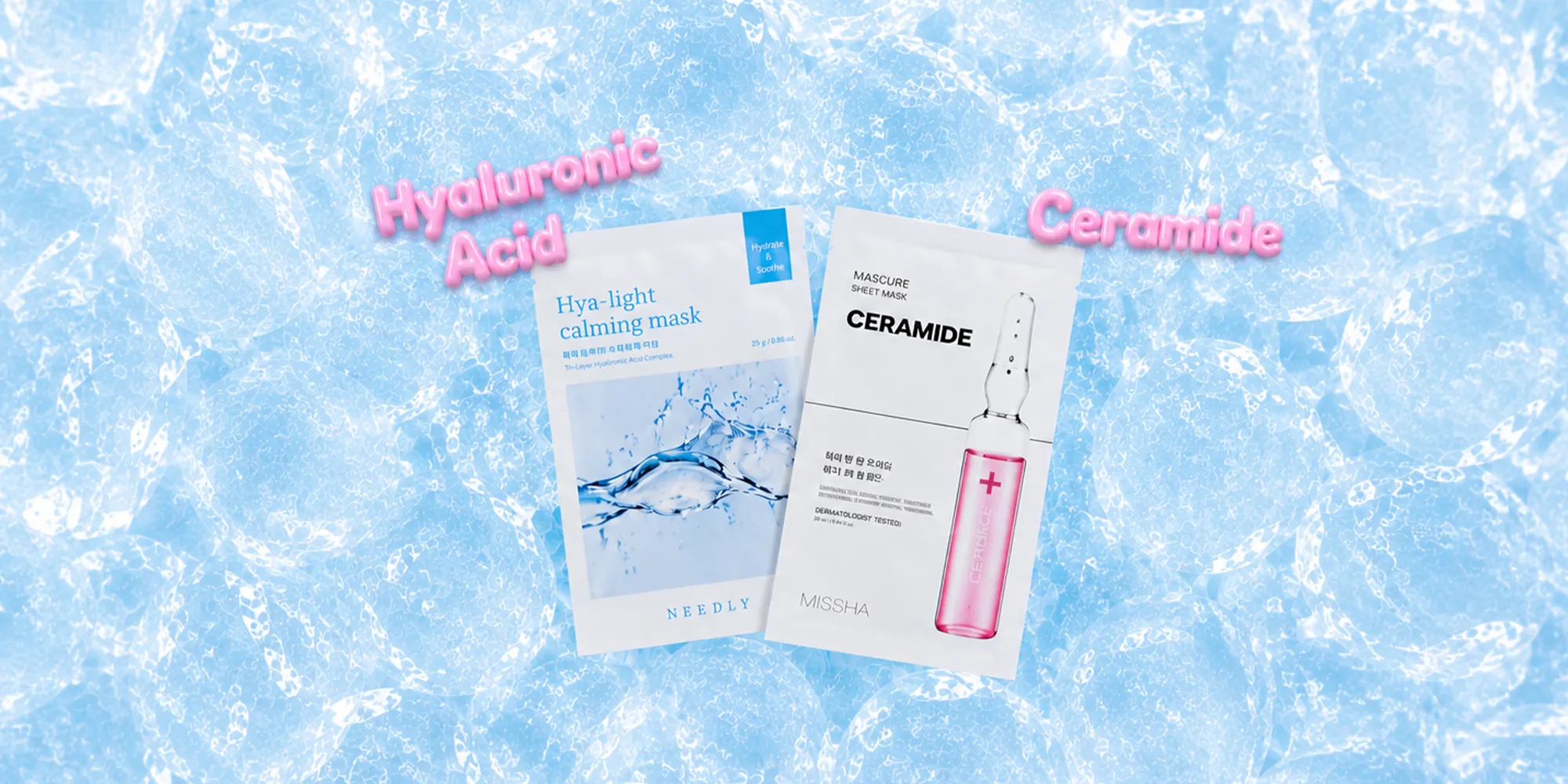
Both ingredients are skincare essentials, but they work differently. So, what’s the difference between them? Let’s figure it out together 🤓
Key Differences
Sun exposure, strong wind, sudden cold weather, new cosmetics… Our skin reacts to even the smallest changes every day. And sometimes, it needs different kinds of support.
Hyaluronic acid is a substance naturally found in our skin. It attracts and retains moisture, helping the skin look fresher and plumper while making fine lines caused by dehydration less noticeable.
Ceramides are natural lipids that help support the skin’s protective barrier. They essentially “strengthen” it, reduce moisture loss, and help protect the skin from dryness, flaking, and irritation.
So, which one should you choose? Listen to your skin — it will tell you what it needs ✨ A sheet mask with ceramides can help with irritation and flaking, while hyaluronic acid provides an intensive boost of hydration 💧
Which Skin Type Is Each Ingredient Best For?
You don’t necessarily have to choose just one — it all depends on how your skin feels right now. Here’s a little cheat sheet from our girls 🥰
Dry skin usually needs extra nourishment. Ceramides are the priority here, as they help retain moisture and reduce flaking.
Dehydrated skin (even if it’s oily) needs intensive hydration. In this case, hyaluronic acid can quickly help relieve that tight feeling.
Sensitive skin especially appreciates ceramides. They support the restoration of the skin barrier, helping the skin become less reactive to wind, cold, or cosmetic products.
Combination skin can benefit from both ingredients. Hyaluronic acid helps hydrate dry areas, while ceramides support a healthy skin barrier without unnecessarily weighing the skin down.
If you’re still unsure, focus on your main concern: instant hydration or long-term barrier support? Ideally, it’s worth having both types of masks on hand so you can adapt your skincare routine to your skin’s needs whenever you like 💕
Benefits and Limitations of Hyaluronic Acid
Hyaluronic acid has a superpower: it can hold many times its own weight in water. This creates a visible “plumping” effect.
Why we love hyaluronic acid:
- Instantly smooths the appearance of fine lines caused by dehydration.
- Absorbs quickly, has a lightweight texture, and doesn’t leave a greasy or film-like feeling.
- Works well with vitamin C, retinol, and niacinamide, helping make your skincare routine more comfortable and reducing the risk of dryness.
- Helps the skin look fresher and more rested.
- Suitable for most skin types, including blemish-prone skin.
- Prepares the skin for makeup application by helping reduce visible flaking.
- Does not cause comedones or breakouts.
- Helps maintain skin comfort and supports its recovery.
But there are a few things worth knowing ☝️ Hyaluronic acid works mainly in the upper layers of the skin, so it doesn’t address the underlying cause of dryness. To help keep moisture in the skin for longer, it’s a good idea to apply a cream after using a mask or serum with hyaluronic acid. This is especially important in rooms with dry air, where the feeling of dryness may return more quickly without additional skincare.
Benefits and Limitations of Ceramides
Our skin can be pretty unpredictable. One day it suddenly feels dry, and the next it may look extra shiny in the sun. If you’ve noticed similar ups and downs, ceramides can become your skincare lifesaver 🪄
Why ceramides are essential for our girls:
- Reduce the feeling of tightness after cleansing.
- Quickly soothe irritated skin.
- Help the skin stay moisturized for longer throughout the day.
- Reduce roughness, making the skin feel softer to the touch.
- Help the skin better withstand temperature changes and wind.
- Support faster recovery after intensive treatments.
- Strengthen the skin’s protective barrier and help maintain its integrity.
- Help make the skin less vulnerable to external irritants.
- Help reduce skin sensitivity, so it is less likely to react with redness to cold weather or new cosmetic products.
However, ceramides also have their own limitations ☝️ They don’t smooth wrinkles or provide an instant “plumping” effect because their main purpose is to support and restore the skin barrier. Some ceramide products may contain oils or other nourishing ingredients that may not feel comfortable for everyone, especially if the skin is prone to breakouts. In addition, ceramides themselves don’t provide the skin with moisture, so they work best when combined with hydrating ingredients such as hyaluronic acid.
The role of ceramides is to support the gradual restoration of the skin barrier. With regular use of ceramide-based products, the skin barrier gradually becomes stronger, so the results tend to become more noticeable over time rather than after a single application.
When to Choose Hyaluronic Acid and When to Choose Ceramides
When choosing skincare today, it’s important to consider not only your skin type but also its current condition. Once you learn to understand what your skin needs, you won’t feel the need to keep buying the same products over and over again.
✔️ Choose a sheet mask with hyaluronic acid if:
- You have an important event coming up and your skin looks tired.
- You feel slight tightness after cleansing, but your skin is generally in stable condition.
- You have oily or combination skin and are worried about overloading it with rich textures.
- You plan to apply makeup right after your skincare routine (hyaluronic acid under foundation is a great choice).
Check out these hyaluronic acid masks you’re sure to love:
✔️ Choose a sheet mask with ceramides if:
- Your skin reacts strongly to cold, wind, or changes in your skincare routine with redness or irritation.
- You’re experiencing noticeable flaking, and your skin feels like it “stings” after applying serums.
- You actively use acid peels or retinol (ceramides can help reduce the frequency and intensity of irritation).
- Dryness is accompanied by a feeling of “fragility,” meaning your skin looks dull and depleted.
Take a look at the ceramide masks our girls love:
Ultimately, the choice is yours 💛
Conclusion
Hyaluronic acid or ceramides? That is the question (almost like Shakespeare) 😄
In reality, these ingredients aren’t competitors at all. They’re perfect allies that complement each other beautifully when used together.
Hyaluronic acid helps hydrate the skin, while ceramides help lock that moisture in and support the protective barrier. That’s exactly why these ingredients are so often combined in the same skincare routine.
But remember, sheet masks are only an additional step in your skincare routine. If your skin needs hydration, choose a mask with hyaluronic acid. If sensitivity, flaking, or a weakened protective barrier are your main concerns, reach for a mask with ceramides. Better yet, keep both options on hand and use them according to your skin’s current needs. That’s what mindful skincare is all about 🫰💫
This translation is AI-generated, so there might be some minor slip-ups 😌
Did you like the article?
support the author
4 likes